Art of the Wild: A Dwayne Harty MasterClass is your chance to paint alongside a master. Spend your days in hands-on workshops with renowned wildlife artist Dwayne Harty, then unwind with inspiring evening talks and art presentations. Connect, create, and be inspired.
Event Overview
Event: Art of the Wild: A Dwayne Harty MasterClass
Dates: To be announced
Location: The Create Space @ IKS Media — 340 McDonald St. Regina, SK
In the Evening
In the evening, the MasterClass transitions to a series of art presentations and lectures with Dwayne Harty. These sessions provide a deeper look into his artistic journey, creative process, and the stories behind his work, offering inspiration and insight in a relaxed, conversational atmosphere.
During the Day
During the daytime portion of the MasterClass, participants engage in hands-on painting sessions led by Dwayne Harty. These workshops offer a unique opportunity to learn directly from the artist, exploring techniques and creative approaches in an immersive, supportive setting.
Daily Schedule

Day 1
9:00 AM - 10:00 AM
Meet and Greet, introductions
PBS TV documentary: “Dwayne Harty: An Artist’s Journey” (30 minutes)
Orientation to supplies, tools and their uses
Learning to see: an introduction to drawing from life and the importance of proportion, perspective and foreshortening
10:00 AM - 12:00 PM
Participants will be drawing from life
12:00 PM - 1:00 PM — LUNCH
1:00 PM - 2:00 PM
Introduction to the studio easel and the pleinair French easel
The Frank Vincent DuMond Prismatic Palette: A history, Frank Vincent DuMond and Willard Metcalf.
The Cornerstones of Classical Painting: Value and Color Temperature
A Common Language: Theory and Practice
2:00 PM - 5:00 PM
Painting from life/a wildlife subject
Understanding wildlife and animal character and anatomy
“Learning to See” “handout”: a classical text for study
7:00 PM - 9:00 PM
Presentation: “The Masters of Wildlife Art: Carl Rungius, Wilhelm Kuhnert, Bruno Liljefors, Richard Friese, Heinrich von Zügel”
Presentation: “The Masters of the Natural History Diorama: William R. Leigh, James Perry Wilson, Belmore Browne, Francis Jaques at the American Museum of Natural History, New York City”.
Presentation: “Dioramas Created by Dwayne Harty”. Harty studies with Raymond Delucia, American Museum of Natural History, NYC and Ruth Billard/Ralph Morrill, Peabody Museum, Yale Campus, New Haven, Connecticut.
Day 2
9:00 AM - 10:00 AM
Review of Classical Text: Theory and Application
Q/A
10:00 AM - 12:00 PM
Painting a wildlife and animal subject from life
The use of photography as an aid
12:00 PM - 1:00 PM — LUNCH
1:00 PM - 3:00 PM
A demonstration in oil paint painting a wildlife subject from a photograph by Dwayne Harty
Q & A
3:00 PM - 5:00 PM
Students will paint a wildlife subject or domestic animal subject from their favorite photo
Critique
7:00 PM - 9:00 PM
Presentation: “Bison Legacy: the Artistic Vision of Dwayne Harty” — 100 works, Whyte Museum, Banff, Alberta — October - December, 2024
Presentation: “Yellowstone to Yukon: the Journey of Wildlife and Art”, Harvey Locke, Dwayne Harty. International traveling exhibition. 2011-2012
Day 3
9:00 AM - 10:00 AM
Landscape Painting and Plein Air Landscape Painting: Classical Theory and Application, John F. Carlson, Edgar Payne
Elements of design as applied to landscape composition
10:00 AM - 12:00 PM
The use of photography as applied to painting landscape
Students will paint a landscape from their favorite landscape photo
12:00 PM - 1:00 PM — LUNCH
1:00 PM - 3:00 PM
A landscape painting demonstration in oil utilizing a photograph by Dwayne Harty
Q & A
3:00 PM - 5:00 PM
Students will continue painting the landscape started in the morning followed by a critique
7:00 PM - 9:00 PM
A course review
Classical academic text handout
Q & A
Farewells
Dwayne Harty
Wildlife artist Dwayne Harty brings more than 35 years of experience to his celebrated career as a painter, sculptor, and diorama specialist. A born Canadian and now a dual citizen, Harty is originally from Saskatchewan and lived for many years in Regina before establishing his studio in Jackson, Wyoming. Trained at the Art Students League in New York and mentored by renowned wildlife artists such as Bob Kuhn, Robert Lougheed, and Clarence Tillenius, Harty has developed a style that blends realistic observation with an impressionist’s sensitivity to light, color, and atmosphere. His work ranges from copper plate etchings and easel paintings to large-scale dioramas, including a three-story Costa Rican rainforest and ten miniature dioramas for the Smithsonian’s David Koch Hall of Fossils. A scholar of the great wildlife masters, he has retraced the paths of Carl Rungius and studied the techniques of James Perry Wilson, working closely with exhibit legends from the American Museum of Natural History and Yale’s Peabody Museum.
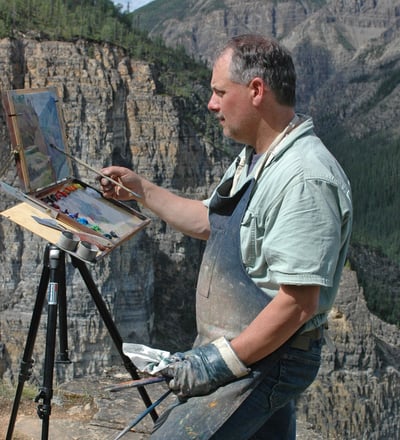
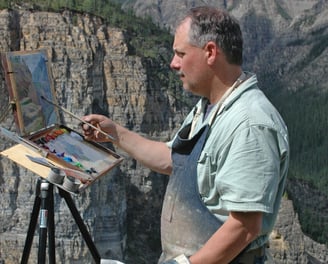
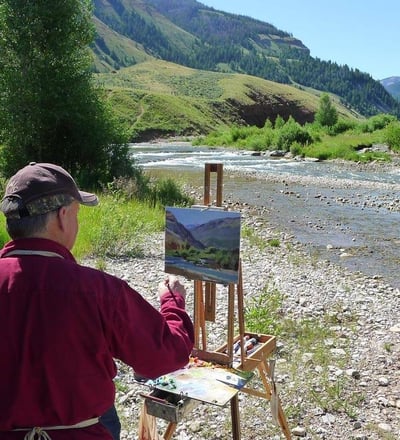


Harty's most ambitious recent undertaking is a three-year international commission from the Canadian and U.S. National Wildlife Federations to depict all three world bison species. This project has taken him from the Białowieża Forest in Poland to more than a dozen parks and reserves across North America and involves deep collaboration with Indigenous Nations to tell culturally rich and historically grounded stories. Previously, he spent three years traveling the Yellowstone to Yukon corridor—by truck, raft, helicopter, and horseback—for a major conservation art exhibition, culminating in his residency at The Murie Center and recognition as the 2011 Jackson Hole Fall Arts Festival’s featured artist. His work is held in numerous public and private collections and was the subject of a PBS documentary, Dwayne Harty: Journeys of an Artist. He lives in Idaho and works out of Jackson, Wyoming, where he continues to exhibit and create.
Artwork Gallery
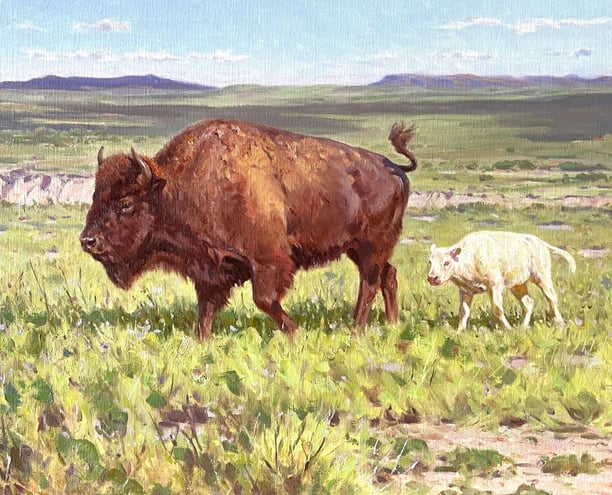
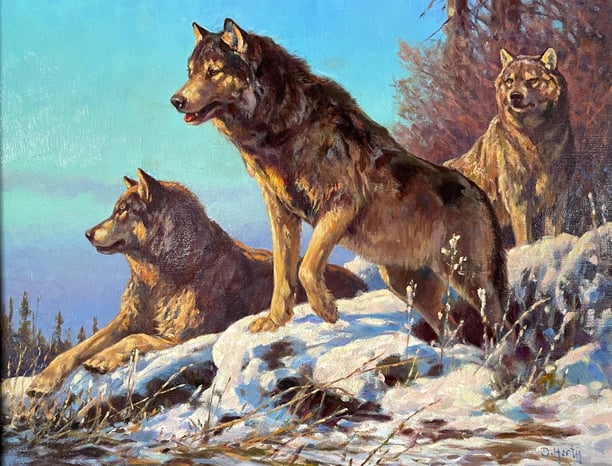
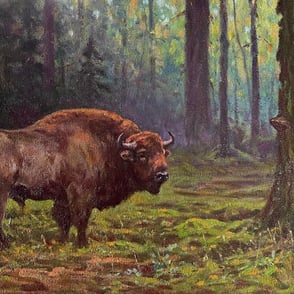
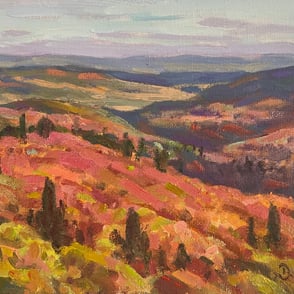
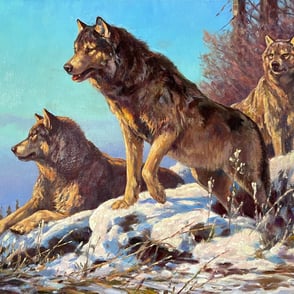
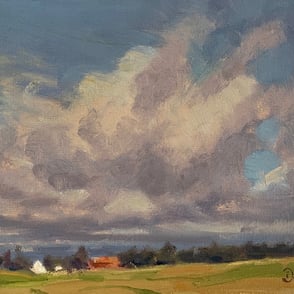
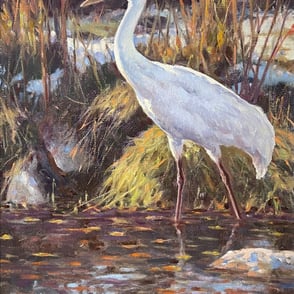
A few works by Dwayne Harty, drawn from a life spent in the wild, capture the fleeting poetry of nature through the eyes of a seasoned artist.
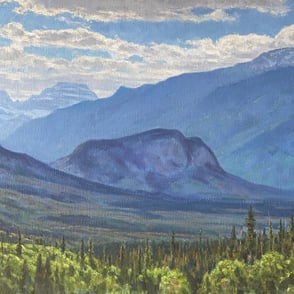
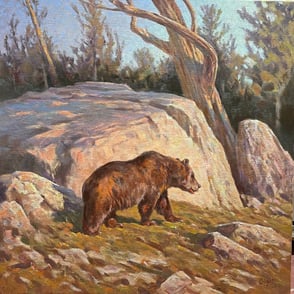
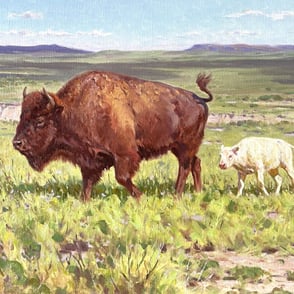
Q&A
Questions and answers with the artist.
Did you always know you wanted to be an artist/painter? Was there a moment when you knew?
Having been born in Shaunavon and growing up in Saskatchewan, some of my earliest memories are of the out of doors; on my relative’s farms or ranches in southwest Saskatchewan, family camping trips or hunting and fishing with my father and brother. These experiences were the foundation of my love of the outdoors and animals.
Our family eventually settled in Regina where I started school in Kindergarten and, in that city, became enamored by the Saskatchewan Museum of Natural History ( now the Royal Saskatchewan Museum ). The diorama background paintings and foreground taxidermy work were masterful and completely captivated me. It spawned a desire to recreate animal life and landscape. So, at the age of 12, with my parent’s encouragement, I enrolled in the Northwest School of Taxidermy correspondence course headquartered in Omaha, Nebraska. At the same time I met the wonderful exhibit and art staff of the Royal Saskatchewan Museum: Fred Lahrman, Jack Pickering, Ron Tillie, Don Pingert and Lorne Scott. The time I spent with them at a very early age solidified my desire to become an artist. Fred Lahrman was my closest friend and mentor which meant that I eventually segued from taxidermy to a complete focus on art by the age of sixteen.
With Fred’s encouragement my eyes were, for the first time, opened to the world of fine art and specifically the genre of wildlife and animal art. I decided to commit to this endeavour and traveled by bus at age 15 from Regina to Winnipeg to meet Canadian wildlife artist Clarence Tillenius. Clarence conducted his annual “Wildlife Drawing, Painting and Anatomy” classes at the Okanagan Game Farm in Penticton, BC. The following summer I was invited to attend Clarence’s two week program at the expansive, drive through safari-type wildlife game park. Surrounded by wildlife from around the world and the opportunity to meet other aspiring artists under Clarence’s tutelage - it was the perfect milieu. Clarence’s personal library of over 5000 volumes was the first time I was exposed to the broad world of art. With his emphasis on observing the animals and drawing directly from life ( without the aid of photos) this was the first time those two worlds collided. At this point I knew I needed more intensive training in the classical foundation of art. So, I worked as a brick layers helper on the construction site in Calgary to gather the funds necessary to attend the Art Students League of New York City. This further cemented my direction and I felt as though this was my career path. The Art Students League was followed by four more years apprenticing under Robert Lougheed in Santa Fe, New Mexico. Robert was a student of Frank Vincent DuMond who had taught at the Art Students League for over 50 years. DuMond was one of N. America’s most respected art educators having studied in Paris with fellow artist George Bridgeman under Jules Lefebvre and Benjamin Constant at the Julien Academy. After my four years with Robert Lougheed I returned to Saskatchewan where I began to forge a path as an artist.
It goes without saying that one of the most important pieces of advice I can give to an aspiring art student is to spend at least several years grounded in a solid academic training that includes the discipline of learning to see complimented by the ability to work directly from life: anatomy, drawing, painting, sculpture.
Which artist is your biggest inspiration and why?
Because my interest is in wildlife art my interest in that genre has focused on the global masters of wildlife art: Wilhelm Kuhnert, Carl Rungius, Richard Friese and Bruno Liljefors. Other artists of domestic animals that I study regularly are: Heinrich von Zugel, Lucy Kemp-Welch, Rosa Bonheur, Alfred Munnings, Edwin Landseer and Alfred Kowalski.
If you could give advice to a young-artist, what would it be?
Advice to a young artist: a) surround yourself with knowledgeable, caring, talented teachers and colleagues. b) seek the finest classical arts training possible. Study closely the works of the instructors you intend to study from in order to form a direction you believe you would like.
After working on large projects for hundreds of hours, how do you know or decide you're done? What does that moment feel like?
Large scale projects are extremely demanding and require periods of continual, sustained application. It’s important to get away from the work at times in order to view the progress objectively. Most large museum projects require the collaboration with staff scientists so the final decision of a completed work is often decided upon by the artist and scientists. Studio work is more personal with a greater emphasis on the aesthetic. In either scenario I bring a work along to the best of my ability - set it aside for a awhile - and if I can’t improve upon it then I’ll consider it finished. It always feels like a sense of satisfaction coupled with a feeling that I can improve. It’s the same with most artists. The past masters have given us those sign posts of achievement accompanied by humility.
What do you hope to provide to the people who take your classes?
In the brief three day workshop I will be introducing the student to a classical foundation in art as taught by Frank Vincent DuMond through my four years with Robert Lougheed in Santa Fe.
If someone wanted to check out your work in Regina, where would you tell them to go and see?
The best place to view my work is at the Royal Saskatchewan Museum where I created several large dioramas: the “Costa Rican Rain Forest” diorama and the “Bird Island, Arctic” diorama.
FAQ
Necessities
a package of thin "vine charcoal” sticks
small sandpaper block
to sharpen the vine charcoal sticks to a fine pointkneaded eraser
an 16”x20” or 18"x24" drawing pad
white paperspray fixative
to stabilize the charcoal and prevent the charcoal drawing from smudging
Other Essentials
wide brimmed hat
to shield eyes from over head light and when working outdoors to shield from the sunpainting smock
a neutral grey coloured fabric - NOT a strong colourpaper towels
thin rubber gloves
paint mixing knife
plastic grocery bags for clean up each day
small dish soap for cleaning brushes
Painting Supplies
In terms of painting supplies you are encouraged them to bring whatever paint you feel comfortable with: oils, watercolors or acrylics.
If you paint in oil it is insisted that you purchase odorless paint thinner to eliminate the heavy odor that can occur. Stores such as Canadian Tire should have this available.
You are responsible for bringing your own art supplies.
If you have additional questions, please email your inquiries to amanda.w@iksmedia.com and we will be sure to help.
Parking & Accessibility
Free parking is available directly in front of the venue. The venue’s main level is wheelchair accessible to ensure a comfortable and inclusive experience for all guests.